
When traveling, you often snap photos with your phone of sea of clouds, mountain tops, rural cottages, and seaside sunsets. If you want to turn them into postcards to send to others but don't know who to ask, the cost can also be high.
Here is a highly practical postcard layout. Even the original images taken by ordinary tourists can be used — no professional photography skills needed, and the final result is suitable for physical printing.
Layout: Vertical 3:4, Split in Half
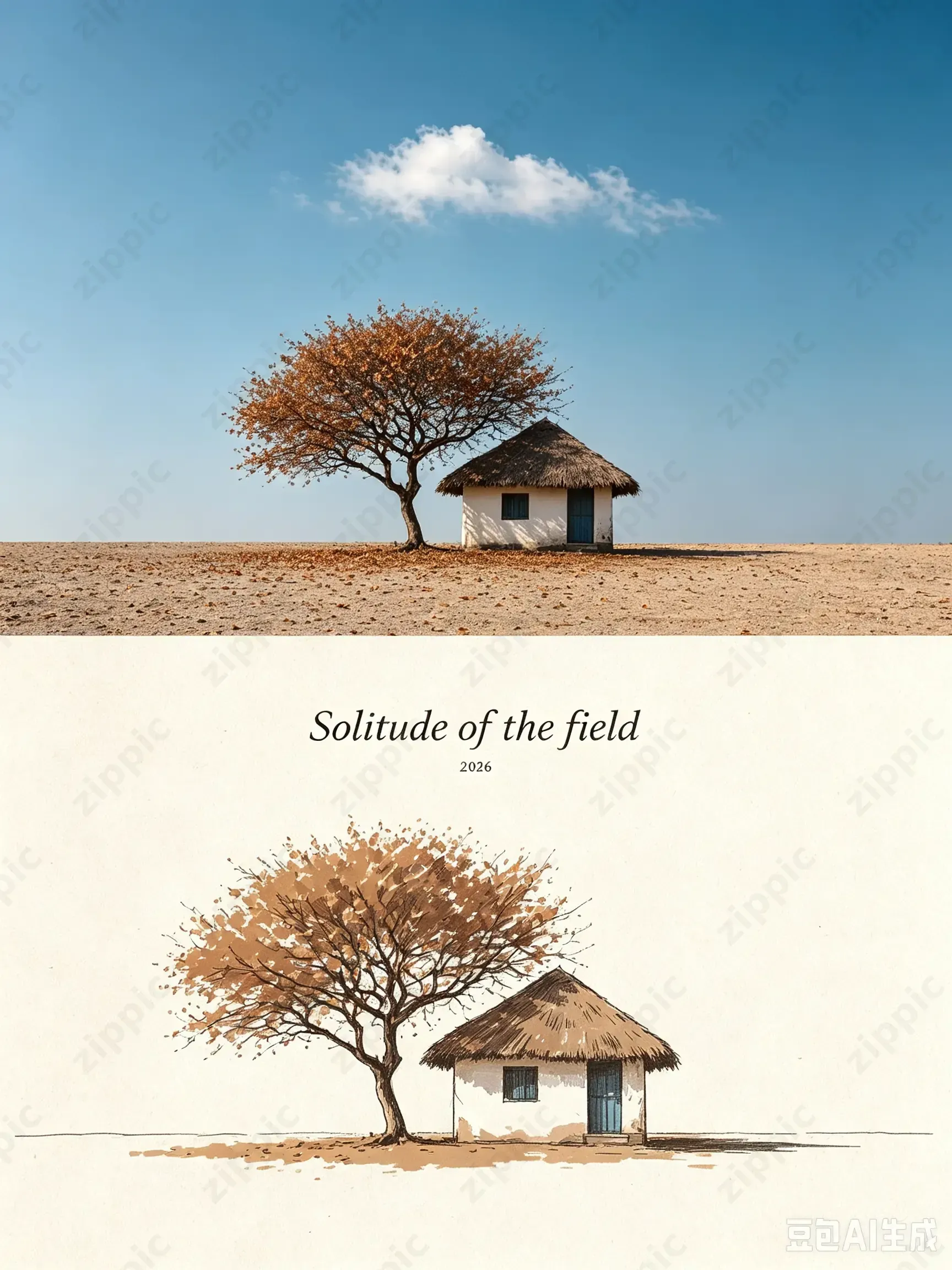
The top half is the actual photo
Keep most of your original image as-is, applying only a light magazine-style color grade to enhance the light and atmospheric feel. If the sky is too narrow or the ground is too cramped, you can slightly extend the background outward to fill the space, without deforming the main subject.
The bottom half is minimalist hand-drawn illustration
Extract only the most essential silhouette from the scenery, leaving out fine details so the location is still recognizable at a glance. Use slightly wobbly thin lines, complemented by a few flat acrylic-painted color blocks. Colors are derived from the top photo, keeping the entire piece within four colors. The subject is deliberately kept small — occupying only 10% to 20% of the lower half — leaving the remaining area as generous white space. The base layer has a textured rough white-paper feel, with slight handmade smudging at the edges of the color blocks. Avoid watercolor washes, heavy oil painting, 3D modeling, or cartoonish styles. Instead, go for a calm, relaxed, childlike hand-drawn quality.
Full Prompt
Please turn each photo I upload into a separate premium design poster — no multi-image collage, every photo is processed individually. Use a vertical composition with {argument name="Composition Ratio" default="3:4"}, and strictly divide the upper and lower areas in a 1:1 ratio, each occupying 50% of the frame.

The top half preserves the original photo, maintaining its subject structure, realistic texture, natural lighting, and original color atmosphere. Apply only a subtle, premium photography-grade color grade to give it a magazine-photography and art-publication feel. To adapt to the aspect ratio, the sky, ground, or environment background may be naturally extended, but the subject must not be stretched, distorted, or changed.

The bottom half extracts the most identifiable subject, silhouette, posture, and narrative relationships from the photo, reconstructing them into a minimalist paper-textured hand-drawn cover illustration. Highly refine and reduce complex details, retaining only the key visual features. Use fine, slightly unstable hand-drawn lines and a small number of clear flat acrylic color blocks to re-express the scene, making the original theme instantly recognizable. The subject stays small and focused, occupying about {argument name="Subject Size Ratio" default="10%–20%"} of the lower half, surrounded by abundant white space. The background should be predominantly textured rough or light-colored paper, with only minimal lines or color masses suggesting the environment.

Extract the color palette from the top photo and compress it to no more than 4 main colors. The color blocks should be clear, complete, and restrained, retaining paper grain, hand-applied smudging, and slightly irregular edges. Lines are used to suggest structure, while color blocks are used to establish the subject. Avoid colored pencil, crayon, watercolor washes, pure line art, complex realism, heavy oil painting, smooth digital illustration, and 3D texture.

You may add a small amount of concise text — titles, thematic words, object names, locations, years, numbers, or short phrases based on the photo content, not limited to city themes. Typography should be airy and restrained, blending naturally with the white space and illustration, evoking the design feel of art book covers, indie publications, and children's picture books. Overall, aim for a visual character of small subject, large white space, strong abstraction, high recognition, quiet, whimsical, relaxed, poetic, and premium — avoiding commercial cartoon, e-commerce, and template-like feels.
Suitable Scenes
Mountain seas, seaside sunsets, countryside cottages, lakes, forests, and old town streets. Everyday shots taken on your phone are enough — no DSLR masterpieces required. The final output is high-resolution and color-stable, so you can take it directly to a print shop and order physical postcards.
Practical Tips
- Choose images that are clean and have a clear subject. Scenes with many passersby or clutter can make hand-drawn abstraction trickier.
- Simple compositions like sunrise/sunset, sea of clouds over distant mountains, solitary trees in the wilderness tend to yield the best results.
- The caption at the bottom is flexible — travel dates, destination names, short trip phrases all work. This makes each postcard an exclusive personalized memento.
Previously, getting a hand-drawn postcard like this meant commissioning an illustrator — expensive and time-consuming. Now, with this top-bottom split template, just upload one of your travel snapshots, and the real scene alongside its hand-drawn interpretation comes together effortlessly. From now on, every trip can leave you with your own set of scenic postcards.